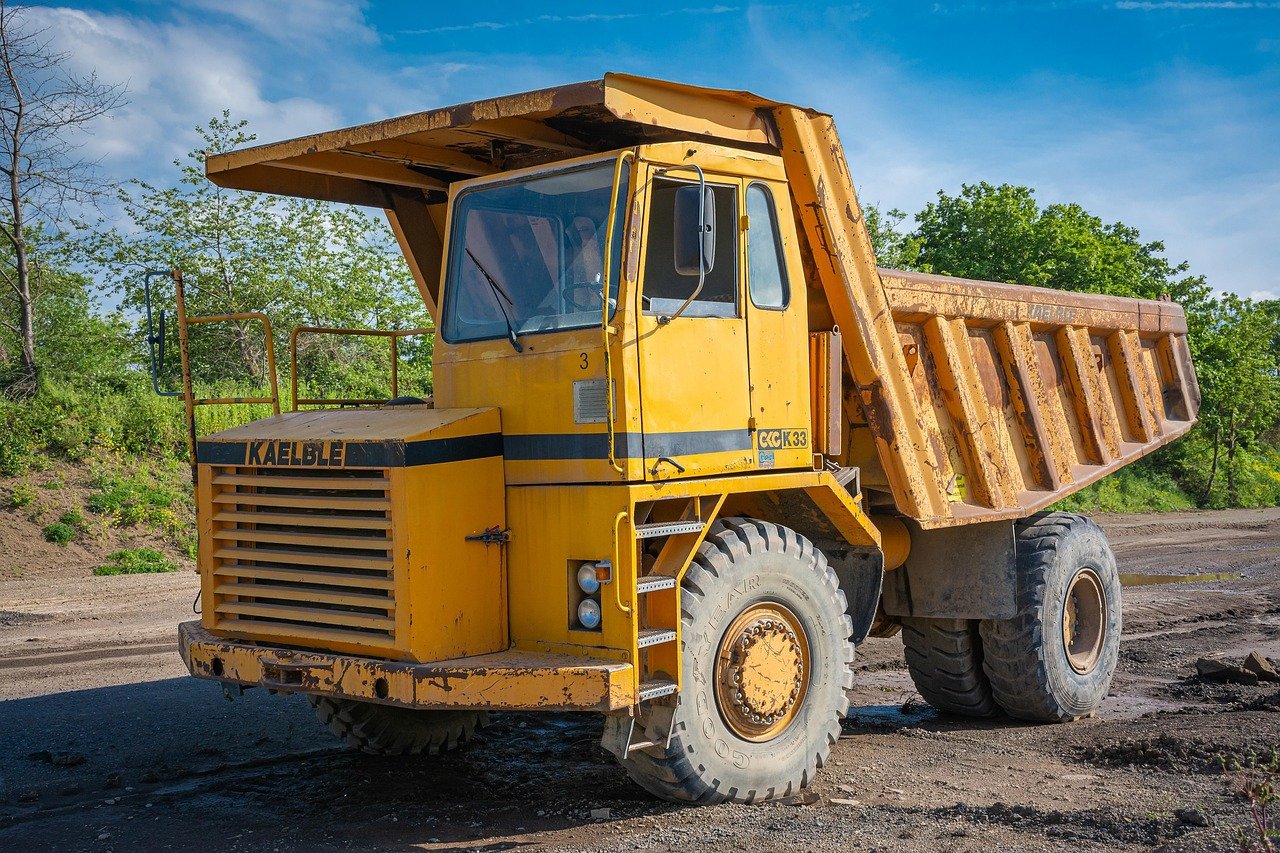
Most light-truck enquiries open the same way: "we need a 3.5-tonne truck for the site". Two suppliers quote, the trucks land, and one plate reads 3,500 kg while the other reads 6,700 kg. Nobody lied. The word tonne was doing different work in the two catalogues. What follows puts four published sheets side by side — a Toyota Dyna 300/350, an Isuzu NKR55 cab-chassis, a JAC HFC1048K and a Foton Aumark S1 — and does the subtraction.
Three weights under one word
Every truck carries three weights and they are not interchangeable. Gross vehicle weight (GVW) is the maximum the loaded vehicle may weigh. Kerb weight, or tare, is what it weighs empty. Payload is GVW minus kerb, and it is the only figure that answers "how much can I put on it". Toyota prints the fine print on its own Dyna sheet: kerb weight and maximum payload both "include all fluids and a full tank of diesel, but do not include a driver, passengers or other added accessories". Isuzu, JAC and Foton compute the same way, so the arithmetic travels across badges. What does not travel is which of the three the badge is naming.
Axle limits are a separate pair of numbers, not a budget you can spend twice. The Dyna 350 is rated 1,800 kg front and 2,550 kg rear — 4,350 kg against a 3,500 kg gross weight. Those are individual maxima: the rear takes 2,550 kg only while the front carries 950 kg or less.
One badge, 645 kg of payload spread
The clearest demonstration sits inside one model family. Every Dyna 350 below carries the same 3,500 kg gross weight; what changes is the body bolted to the frame.
| Dyna model and body | GVW | Min. kerb | Max. payload | Axle limit front / rear | Tyres | Ground clearance | Kerb turning radius |
|---|---|---|---|---|---|---|---|
| 300 single tilt chassis | 3,000 kg | 1,490 kg | 1,510 kg | 1,800 / 1,800 kg | 195/70R15 | 190 mm | 4.5 m |
| 300 SWB dropside, alloy sides | 3,000 kg | 1,710 kg | 1,280 kg | 1,800 / 1,800 kg | 195/70R15 | 190 mm | 4.5 m |
| 300 tipper, alloy sides | 3,000 kg | 2,000 kg | 1,000 kg | 1,800 / 1,800 kg | 195/70R15 | 190 mm | 4.5 m |
| 350 MWB single tilt chassis | 3,500 kg | 1,660 kg | 1,840 kg | 1,800 / 2,550 kg | 195/70R15 | 200 mm | 4.9 m |
| 350 MWB dropside, alloy sides | 3,500 kg | 1,975 kg | 1,525 kg | 1,800 / 2,550 kg | 195/70R15 | 200 mm | 4.9 m |
| 350 MWB tipper, alloy sides | 3,500 kg | 2,305 kg | 1,195 kg | 1,800 / 2,550 kg | 195/70R15 | 200 mm | 4.9 m |
| 350 LWB single tilt chassis | 3,500 kg | 1,710 kg | 1,790 kg | 1,800 / 2,550 kg | 195/70R15 | 200 mm | 6.3 m |
| 350 LWB dropside, alloy sides | 3,500 kg | 2,220 kg | 1,280 kg | 1,800 / 2,550 kg | 195/70R15 | 200 mm | 6.3 m |
Source: Toyota Dyna UK brochure GBNGV-028DY-VB, February 2008 (3.0 D-4D, 109 DIN hp / 88 kW, 2,982 cc, five-speed). Figures are the brochure's own weights and cargo table; 350 models run twin rear wheels. Current Dyna generations differ in numbers — the method does not.
Two trucks, one badge, 1,840 kg against 1,195 kg. The tipper's steel floor, subframe, chrome ram and pump weigh 645 kg more than the bare chassis cab before a load goes on; the dropside takes 315 kg. Nothing in the driveline changed. Body type is a payload decision, not a finish decision.
Two trucks sold as 3.5-tonne, 3,200 kg apart
Now put a Chinese export catalogue beside the Japanese sheet. The JAC HFC1048K-E8Q44 is sold as a "3.5 Ton Truck": 6,700 kg gross, 3,000 kg kerb, 3,700 kg maximum load. The Dyna 350 chassis cab is 3,500 kg gross with 1,840 kg payload. Both are called 3.5-tonne, and the gross weights are 3,200 kg apart — more than the Dyna's entire payload.
The JAC sheet is not wrong; it is pricing the tonne as payload. What arrives is a 7-tonne class chassis: 3,920 cc Cummins B125 at 92 kW / 125 hp, 420 Nm at 1,500 rpm, six speeds, air brakes, 7.50R16 tyres, 5,915 mm overall length on a 3,308 mm wheelbase. The Dyna 350 brings 2,982 cc, 88 kW / 109 hp, 286 Nm, five speeds, hydraulic brakes and 195/70R15 tyres. Both are honest trucks; they cannot do each other's job.
| Truck and sheet | What the number means | GVW | Kerb | Payload | Tyres | Brakes |
|---|---|---|---|---|---|---|
| Toyota Dyna 350 MWB chassis cab (UK, 2008) | GVW in the model name | 3,500 kg | 1,660 kg | 1,840 kg | 195/70R15 | ABS discs front, drums rear |
| Foton Aumark S1 (Euro VI) | GVW band, not a payload | 3,500-4,495 kg | 2,100-2,350 kg | 1,150-2,395 kg (calculated) | 7.50R16LT | Hydraulic or air, with ABS |
| Isuzu NKR55-E4-3360 (China-built) | Model name, not a weight | 5,250 kg | 1,850 kg | 3,400 kg (calculated) | Not published on sheet | Hydraulic |
| JAC HFC1048K-E8Q44 | Payload in the marketing name | 6,700 kg | 3,000 kg | 3,700 kg | 7.50R16 | Power / air brake |
Sources: Toyota Dyna UK brochure (2008); Foton Aumark S1 Euro VI parameter table published by an exporter; Isuzu NKR55-E4 cab-chassis specification sheet (4JB1-CN, 2,771 cc, 72 kW / 98 hp, Euro IV); JAC HFC1048K-E8Q44 specification sheet published by a Tanzanian distributor. Calculated payloads are GVW minus kerb across the published ranges; the sheets themselves do not print a payload for those rows.
The Isuzu payload row that is a range, not a specification
The NKR55 sheet compresses four wheelbases into one payload row: "2,000 ~ 4,500 kg". It is the single most misread line in this class, because the four trucks under it are not the same vehicle. Do the subtraction per model and the answers separate by 2,560 kg.
| NKR55-E4 model | Wheels | GVW | Kerb | GVW minus kerb | Catalogue payload row | Wheelbase / overall length |
|---|---|---|---|---|---|---|
| NKR55-E4-2490 | 4 | 4,200 kg | 1,680 kg | 2,520 kg | 2,000-4,500 kg (one row, four models) | 2,490 / 4,605 mm |
| NKR55-E4-2765 | 6 | 4,380 kg | 1,810 kg | 2,570 kg | 2,000-4,500 kg | 2,765 / 5,230 mm |
| NKR55-E4-3360 | 6 | 5,250 kg | 1,850 kg | 3,400 kg | 2,000-4,500 kg | 3,360 / 5,900 mm |
| NKR55-E4-3815 | 6 | 7,130 kg | 2,050 kg | 5,080 kg | 2,000-4,500 kg | 3,815 / 6,645 mm |
Source: Isuzu NKR55-E4 cab-chassis sheet (4JB1-CN common-rail, 2,771 cc, 72 kW / 98 hp at 3,400 rpm, 220 Nm at 1,700 rpm, Euro IV). Payload column is this article's subtraction of the sheet's own GVW and kerb figures.
Note what the model name does there: an "NKR55" with a 3,815 mm wheelbase is a 7,130 kg gross vehicle — a 7-tonne truck wearing a 5.5-tonne badge number. That is how a 5.5-tonne expectation becomes a 7-tonne registration, and how a freight quote taken off the model name comes up short at the port.
What the extra tonnes actually buy
The gap between these trucks is not marketing; it is in the parts you will be buying for the next ten years.
| Tyre size | Section width | Sidewall | Nominal overall diameter | Seen on |
|---|---|---|---|---|
| 195/70R15 | 195 mm | 136.5 mm | 654 mm | Dyna 300 / 350 (2008 UK sheet) |
| 7.00R16 | 177.8 mm | 177.8 mm | 762 mm | JAC HFC1035 1.5 t |
| 7.50R16 | 190.5 mm | 190.5 mm | 787 mm | JAC HFC1048K, Foton Aumark S1 (7.50R16LT) |
Overall diameters calculated from the size code (rim diameter plus two section heights); inch-size truck tyres are quoted on the 100 per cent aspect convention, radials in service measure slightly smaller. Section widths are nominal.
Three consequences follow. First, sidewall: 136.5 mm on the 15-inch wheel against 190.5 mm on the 7.50R16, and sidewall height is what stands between a rim and a laterite rock. Second, availability: 7.50R16 and 7.00R16 are stocked in most African and Middle Eastern truck markets, while a 195/70R15 is a van size a mining town may not carry. Third, the chassis underneath: the Dyna 350 runs independent double-wishbone front suspension with a torsion bar and a full-floating rear axle on leaf springs, 200 mm of clearance and a 4.9 m turning circle — a light-delivery vehicle with a truck body on it. The NKR55 and the JAC run leaf springs front and rear, and the JAC adds air brakes, 211 mm of clearance and a 7.5 m turning circle.
Where the 3.5-tonne class stops working
Work forwards from the daily load, not from the badge. A 3.5-tonne class truck as built for Europe and Japan tops out at 1,840 kg of payload as a bare chassis cab, and 1,195 kg as a tipper — so a tipper with 400 kg of crew and tools aboard is full at 795 kg of stone. A site moving 2 to 3 t a day per vehicle is not in this class: it belongs on the 5.25 or 7.13 t NKR55, or the 6.7 t JAC, where the same daily load keeps the axles inside their ratings and the sidewalls intact.
The class earns its place on the other side of the ledger: urban distribution, narrow streets, a 4.5 m turning circle, a 2,300 mm wheelbase, a low deck for hand loading, and a registration band most markets treat as a light vehicle. A 7-tonne cab-over is the wrong tool for that: it will not fit the yard and will not pay for itself on 800 kg loads.
What to put in the enquiry
- GVW, kerb and both axle limits, read off the plate of the exact unit being quoted. Not the model name, not the brochure cover.
- Body type and its weight: chassis cab, dropside, tipper or box. On the Dyna 350 that choice alone moves payload by 645 kg.
- Tyre size and load index, plus confirmation the size is stocked at destination — 7.50R16 yes, 195/70R15 often no.
- Overall length, width and height for container planning and yard access: 5,900 × 1,860 × 2,180 mm on the NKR55-E4-3360, 5,915 × 2,056 × 2,201 mm on the JAC.
- Brake type and parts trail: air brakes need a compressor, drier and valve stock; hydraulic needs none of that but has its own service items.
- Ground clearance and turning circle against the actual route: 190-200 mm and 4.5-4.9 m on the Dyna, 211 mm and 7.5 m on the JAC.
We source new and used light trucks and pickups out of China for fleets in the DRC, Nigeria, Zambia and Saudi Arabia, and quote against the plate rather than the brochure. If a truck is already failing early, send the plate weights and the daily load and we will say which class the job needs. The pickup payload and tyre guide covers the one-tonne class; sourcing, export documents, market notes and the Chinese brand comparison are set out separately.
Frequently asked questions
Is a 3.5-tonne light truck 3.5 tonnes of cargo?
Usually not. In Toyota's own naming the number is the gross vehicle weight: the Dyna 300 is 3,000 kg gross and the Dyna 350 is 3,500 kg gross, whose chassis cab carries a maximum payload of 1,840 kg. Many Chinese export catalogues use the tonne as payload instead: a JAC HFC1048K-E8Q44 sold as a 3.5 Ton Truck has a 6,700 kg gross weight and a published maximum load of 3,700 kg. The two readings are 3,200 kg apart on gross weight, so the only safe question is what gross weight, kerb weight and axle limits are printed on the plate of the unit being quoted.
Why does the Isuzu NKR55 sheet list payload as 2,000 to 4,500 kg?
Because that row covers four wheelbases in one line rather than one model. The NKR55-E4 sheet lists GVW of 4,200, 4,380, 5,250 and 7,130 kg against kerb weights of 1,680, 1,810, 1,850 and 2,050 kg, so the real payload by subtraction is 2,520, 2,570, 3,400 and 5,080 kg. A range spanning 2,000 to 4,500 kg cannot be quoted against any one of those trucks. Ask for the figure per wheelbase, or better, read it off the plate.
Does a tipper or dropside body cost payload?
Yes, and the cost is large. On the same 3,500 kg gross Dyna 350, the bare chassis cab has a 1,660 kg kerb and a 1,840 kg payload, the alloy-sided dropside raises kerb to 1,975 kg and drops payload to 1,525 kg, and the three-way tipper raises kerb to 2,305 kg and drops payload to 1,195 kg. That is 645 kg of payload spent on the tipper body, ram and pump before the first load goes on. Body type is a payload decision, not a finish decision.
Which class suits a mine site: a 3.5-tonne truck or a 7-tonne cab-over?
Follow the daily load and the road. The 3.5-tonne class as built for Europe and Japan is a car-derived chassis on 195/70R15 tyres with 190 to 200 mm of ground clearance, independent front suspension and a 4.5 to 4.9 m turning circle; it is a city and light-delivery tool. A cab-over in the 5.25 to 7.13 t gross range (NKR55) or the 6.7 t JAC HFC1048K runs 7.00R16 or 7.50R16 tyres with a nominal 762 to 787 mm overall diameter, leaf springs front and rear, and in the JAC's case air brakes. On broken laterite with 2 to 3 t on board, the heavier class is the one that lasts.